How to Replace Yourself in a Video with Any Character Using AI (Face Swap Guide 2026)
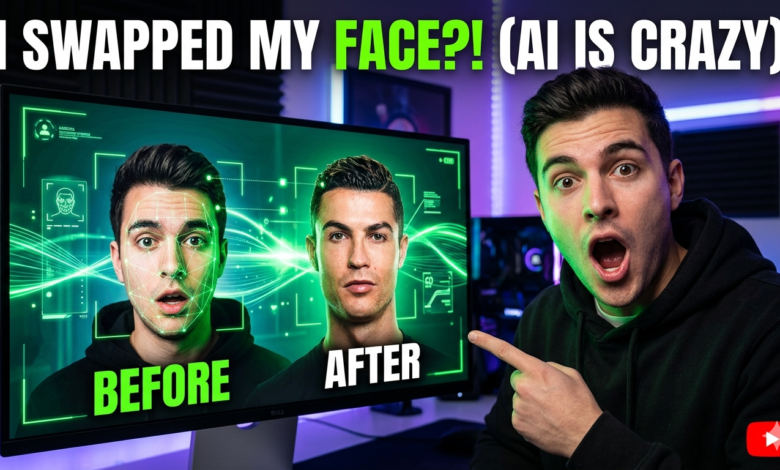
How to Transform Yourself into Any Character in Video Using AI: The Ultimate Guide to Face Swap Technology (2026)
Imagine appearing in a video as a famous Hollywood star—or even as a historical figure speaking directly to your audience. This is no longer a distant dream. In 2026, AI face swap technology has become accessible to everyone. This innovation has completely reshaped the entertainment and digital marketing industries. Think about how influencers now create engaging content without massive budgets. The big question is: how can you, without advanced technical skills, transform yourself into any character using AI face swap? This step-by-step guide has all the answers.
Understanding AI-Powered Face Swap Technology
Face swap technology relies on advanced algorithms that analyze and reconstruct facial features. In the past, these processes were slow and inaccurate. Today, thanks to artificial intelligence, the results are incredibly realistic. AI learns your facial movements and applies them to another face, almost like painting a living portrait. This makes videos look natural—even during fast movements.
From Traditional Algorithms to Generative Adversarial Networks (GANs)
The technology started with simple manual editing tools. Then came GANs (Generative Adversarial Networks), which work as competing systems that improve each other. These networks generate entirely new images from scratch. By 2026, diffusion models have added another layer of precision. For example, GANs can handle different lighting conditions, reducing distortions. The result? Temporally consistent videos where the face remains stable throughout. According to industry reports, face swap technology is now 70% faster than it was in 2020.
These models learn facial expressions in 3D, meaning your smile transfers accurately to the target character. No more stiff or unnatural faces. If you’re creating short videos, you’ll notice quality improving with every update.
Core Components of a Successful Face Swap Process
The first requirement is a high-quality source video. The face should be clearly visible, without harsh shadows. Multiple camera angles help AI build a 3D model. Processing power also matters—most tools require a strong GPU for longer videos. Without it, rendering may take hours.
Basic requirements include:
- Video quality of at least 1080p.
- A clearly visible face with natural lighting.
- Processing time of 5–10 minutes for short videos.
These elements ensure smooth, error-free results such as proper color matching and seamless blending.
Best AI Face Swap Tools in 2026
With the rise of AI, many tools are available. Choose based on your needs: speed or ultra-high accuracy? In 2026, most tools focus on realism and privacy protection. Beginners should start with simple apps, while professionals prefer advanced platforms. Choosing the right tool saves time and improves results.
Cloud Platforms & Professional Software (High-Quality Content)
Platforms like DeepFaceLab and Reface Pro offer high-precision cloud processing. They typically require a monthly subscription ranging from $20 to $50. These tools support batch processing, allowing you to edit multiple videos simultaneously. Advanced controls let you fine-tune lighting and facial expressions. For example, you can adjust blending levels for a more natural look. Regular updates introduce new AI models, maintaining top-tier quality.
For larger projects, you can also explore AI image generators to combine images with video, expanding your creative possibilities.
Mobile Apps & Quick Solutions for Beginners
Apps like Snapchat filters and FaceApp provide instant face swapping. Simply upload your video and select a character. Limitations include shorter video lengths (around 30 seconds) and lower accuracy in complex lighting. However, they are perfect for quick experiments. Choose apps that support on-device AI processing for better privacy.
Selection tips:
- Check user reviews for quality and performance.
- Ensure compatibility with Android and iOS devices.
- Avoid apps that request unnecessary permissions.
These tools make AI face swap accessible to everyone—no powerful computer required.
Step-by-Step Guide: How to Perform a Perfect Face Swap
Now let’s get practical. Follow these steps to create stunning videos. The key is quality input—better input leads to better output. Avoid common mistakes like distorted faces by using the right settings. Take your time with each step for optimal results.
Preparing Source Materials (Target Face & Your Face)
Start by collecting your footage. The source face is yours, while the target face is the desired character. Use your smartphone camera to record yourself from multiple angles. Ensure even lighting with no shadows on your face. Capture different expressions such as smiling and speaking to help AI learn effectively.
Quick checklist:
- Use natural or soft artificial lighting.
- Record from front and slightly angled views.
- Create 10–20 second clips per expression.
If training is required, build a dataset of at least 50 clear images. This improves accuracy, especially for complex characters like actors.
Optimizing AI Settings for Maximum Realism
After preparation, upload your files into the tool. Focus on temporal consistency to ensure smooth motion between frames. Use smoothing masks to blend edges seamlessly so the face integrates naturally into the background. Set blending levels to around 70–80% to avoid artificial appearance.
Practical tips:
- Increase consistency for fast-moving videos.
- Adjust lighting settings to match the target character.
- Reprocess if you notice minor distortions.
This ensures the face swap looks like a natural part of the original video.
Real-World Applications of Face Swap Technology
AI face swap is more than entertainment—it has real-world value. In 2026, it’s widely used in marketing and content creation. The future promises even greater realism, potentially integrating augmented reality. This opens new creative opportunities.
Content Creation & Digital Marketing Use Cases
Influencers use face swap to create personalized ads. Imagine promoting a product using a celebrity face combined with yours. This can reduce production costs by up to 80%. For social challenges, swapping faces with friends creates fun, viral content. Add AI voice cloning for a complete transformation.
For marketers, face swap increases engagement. Studies show up to a 40% boost in video views when AI-modified content is used. Integrate it into your YouTube strategy for maximum impact.
Ethical & Legal Considerations
This technology raises privacy concerns. Never use someone’s face without permission to avoid legal issues. Image rights are strictly protected in many countries. Add watermarks or disclosures to indicate AI-generated content. This builds trust and protects you legally.
Consider the impact: could your content mislead viewers? Use face swap responsibly—for creativity, not deception. In 2026, platforms increasingly enforce AI disclosure policies.
Conclusion: Mastering Your Digital Identity
AI face swap technology has revolutionized video creation. From understanding the technology to choosing tools and executing the process, it’s now accessible to everyone. High-quality input is the key to outstanding results. Start experimenting responsibly and explore the future of digital identity. The creative possibilities are endless—begin your journey today.